
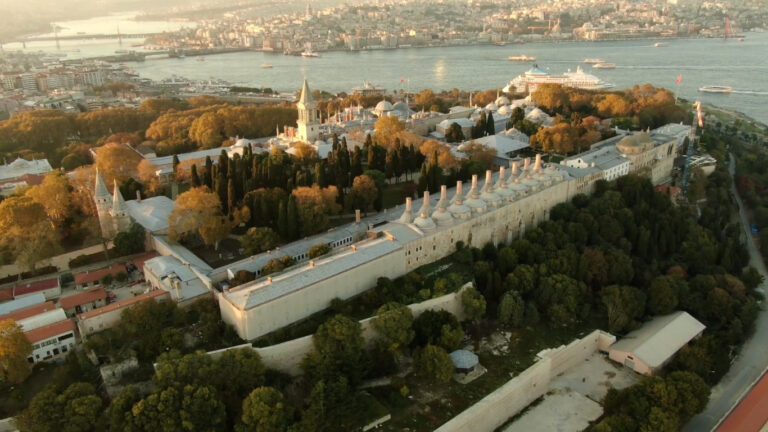
Palaces and Pavilions

The term “palace” in Turkish is used to signify “a grand residence, the dwelling of a monarch, the royal palace, pavilion, or mansion.” In the Ottoman era, the word “saray” (palace) referred to both the Sultan’s residence (known as a “miri saray”) and the seat of government. The word “kasr” has its origins in Arabic, derived from the Latin “castrum” (plural “castra”), meaning a fortified place or the residence of a monarch or local ruler. The term “köşk” has been synonymous with “palace” or “pavilion” since the Middle Ages and also describes certain special buildings within a palace or their architectural features.

Istanbul, being the capital of empires, is adorned with palaces and mansions. The most notable among these monumental structures include the Topkapi Palace, Dolmabahçe Palace, Beylerbeyi Palace, Ihlamur Pavilion, Küçüksu Pavilion, Aynalıkavak Pavilion, and the Maslak Pavilions. Detailed information about these historic sites can be found in the contents below.